

If you are feeling uncertain about choosing among the Oracle Primavera solutions, you are not alone. Many project management professionals also struggle when deciding whether to continue using Primavera P6 EPPM or switch to Oracle Primavera Cloud (OPC).
This article compiles in-depth insights and guidance to help you determine the most suitable option based on your project needs and organizational strategy.
Learn about Oracle Primavera P6 EPPM
For over three decades, Oracle Primavera P6 Enterprise Project Portfolio Management (EPPM) has been the industry standard for scheduling and managing complex projects. It is a comprehensive platform with multiple interfaces and flexible deployment configurations, designed to support organizations with high-level requirements:
- P6 Professional: A full-featured desktop application.
- P6 EPPM: A powerful web platform for enterprise-grade access.
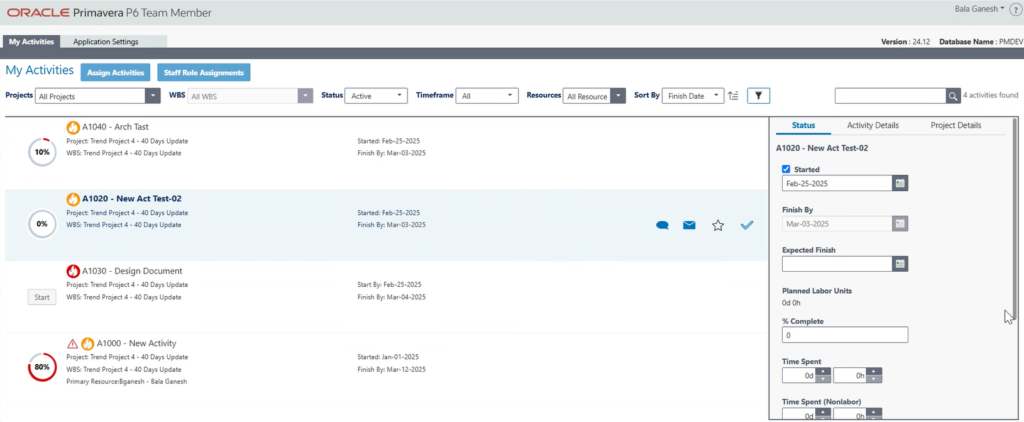
- P6 Team Member: A web and mobile application that supports real-time progress updates and reporting for project teams.
History of P6 EPPM development
In 2008, Oracle Corporation made a strategic acquisition of Primavera and subsequently positioned P6 EPPM as its flagship product in its project management solution suite. Since then, the core functionalities of P6 EPPM have not undergone any groundbreaking changes, but Oracle has maintained a strong commitment to the platform through continuous investment in upgrades, updates, and support services.
This sustained investment demonstrates that P6 EPPM remains a vital component of Oracle's product ecosystem, and the likelihood of Oracle phasing out this platform in the near future is very low. Therefore, organizations currently using P6 EPPM for project management needs can rest assured: it remains a solid platform for continued exploitation, development, and long-term investment.
Advantages of P6 EPPM
Choosing P6 EPPM offers significant advantages, contributing to a comprehensive improvement in project management efficiency. Below are the key reasons why this platform is a worthwhile option:
- Advanced scheduling management: P6 EPPM excels in building, updating, and analyzing project schedules. The system enables managers to maintain tight control over timelines while remaining flexible enough to make necessary adjustments, ensuring projects are delivered on schedule.
- Comprehensive resource management: The resource management module supports the optimal allocation of personnel, equipment, and materials, ensuring that projects are always adequately and efficiently resourced. This helps maximize productivity and minimize waste throughout project execution.
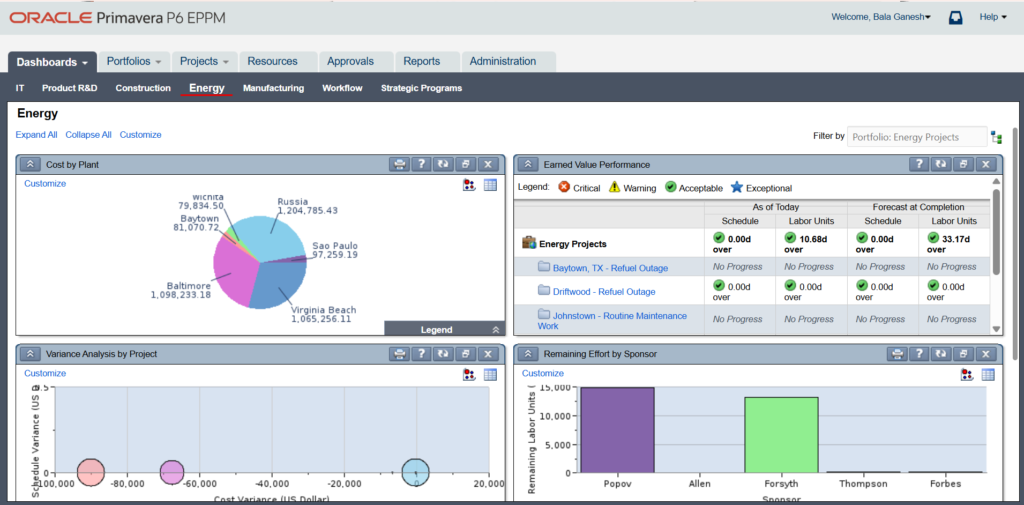
- Earned Value Management (EVM): The EVM functionality provides an accurate view of project performance, enabling comparisons between actual progress, budget, and planned targets. Real-time variance detection allows teams to make timely decisions to keep projects on track.
- Risk management tools: The integrated Risk Register enables systematic tracking and control of project risks. This allows potential issues to be identified and addressed early, minimizing the risk of disruptions or unplanned costs.
- Advanced reporting capabilities: P6 EPPM supports in-depth reporting through BI Publisher and Report Writer, enabling the creation of customized reports tailored to the needs of various stakeholders. This ensures transparency and effective communication throughout the project lifecycle.
- Interactive visualization tools: The platform integrates interactive dashboards and portfolio analytics tools, enabling users to monitor key performance indicators (KPIs) visually and make data-driven decisions based on real-time insights.
- Scalability for complex projects: P6 EPPM is designed to handle projects of varying sizes and complexity, from mid-sized to highly complex initiatives, making it suitable for a wide range of industries and project types.
By implementing P6 EPPM, organizations can enhance project management capabilities, optimize operational performance, and increase the probability of success for strategic programs and portfolios.
Below are some images illustrating the typical features offered by the Primavera P6 EPPM:
Key features of Oracle Primavera Cloud
Oracle Primavera Cloud (OPC) is an advanced project and portfolio management solution designed to meet the increasingly complex challenges of the modern project environment. Inheriting core scheduling and resource management capabilities from P6 EPPM, OPC further expands and enhances functionality with numerous new features aimed at optimizing project implementation efficiency.
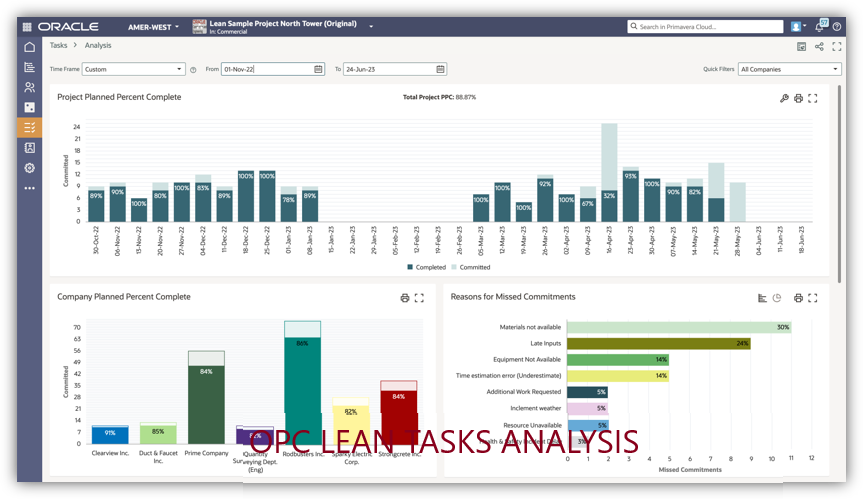
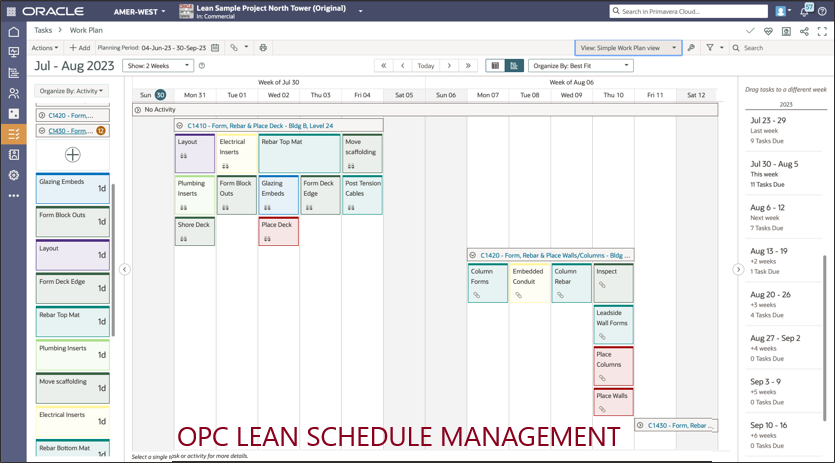
- Lean Schedule Management
One of OPC's highlights is its Lean Schedule Management system. This solution is designed to optimize efficiency and minimize waste throughout the entire scheduling and management process.
In addition to streamlining workflows, the system also supports efficient resource allocation, allowing teams to focus on creating real value instead of dealing with unnecessary delays or tasks.
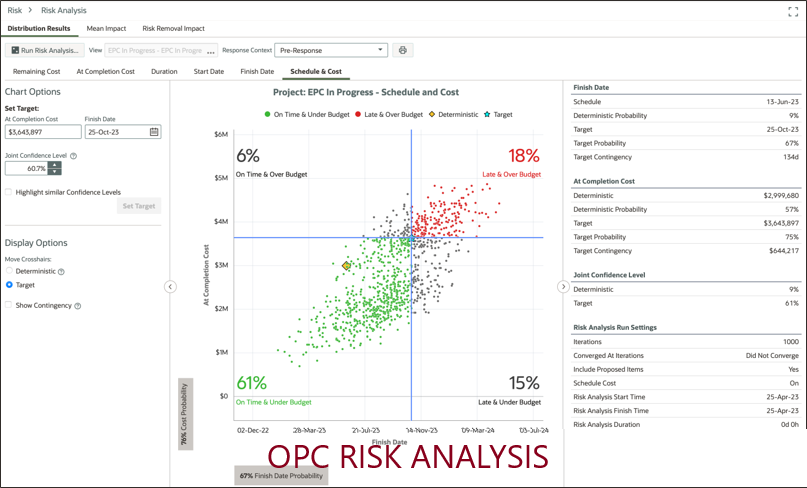
- Advanced risk management
OPC integrates a comprehensive Risk Management toolset, including advanced Monte Carlo analysis functionality.
This capability allows managers to assess potential uncertainties and fluctuations in a project by simulating various scenarios. As a result, strategic decisions are made based on solid quantitative data, contributing to an increased probability of project success.
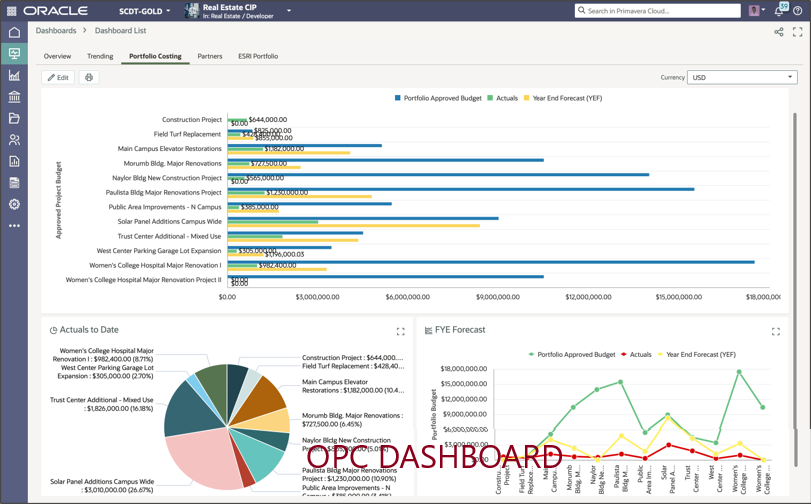
- Real-time dynamic reports and dashboards.
OPC is enhanced with dynamic dashboards and reporting systems, providing real-time information on key project performance metrics.
This data supports data-driven decision-making, helping teams quickly identify problems and adjust strategies as needed.
In addition, the platform integrates customizable workflows and forms, helping to standardize processes, enhance collaboration among stakeholders, and improve overall productivity.
- Compare and simulate progress
For organizations that need to evaluate multiple deployment options, OPC provides a powerful Schedule Comparison tool.
Users can create and analyze various baselines, and perform detailed "what-if" simulations. This supports comprehensive planning, enabling project teams to proactively identify challenges and opportunities before they occur.
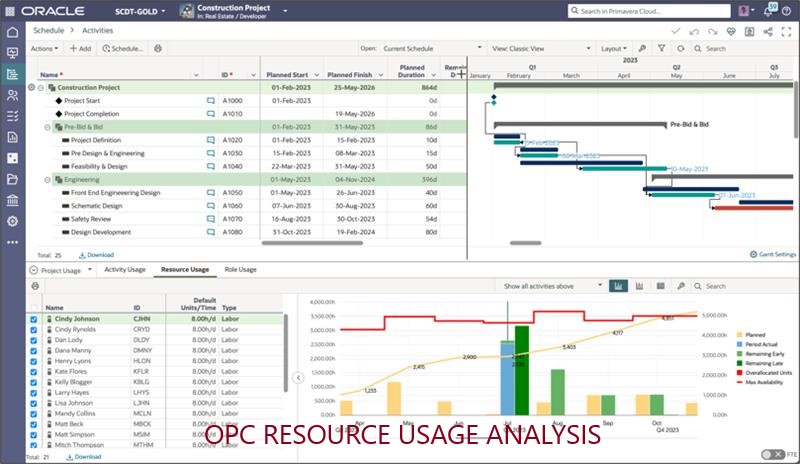
- Resource allocation and portfolio management
OPC is particularly strong in areas such as Capital Planning, Portfolio Management, and Cost Management.
The platform helps organizations allocate resources effectively and build investment strategies based on analytical data, thereby maximizing return on investment (ROI) and minimizing financial risk.
Overall, OPC stands out as a comprehensive solution, focusing on operational efficiency, collaboration, and strategic vision in project management.
OPC interface image
Overall, Oracle Primavera Cloud positions itself as a comprehensive solution, particularly well-suited for organizations looking to elevate their project management practices to a higher level.
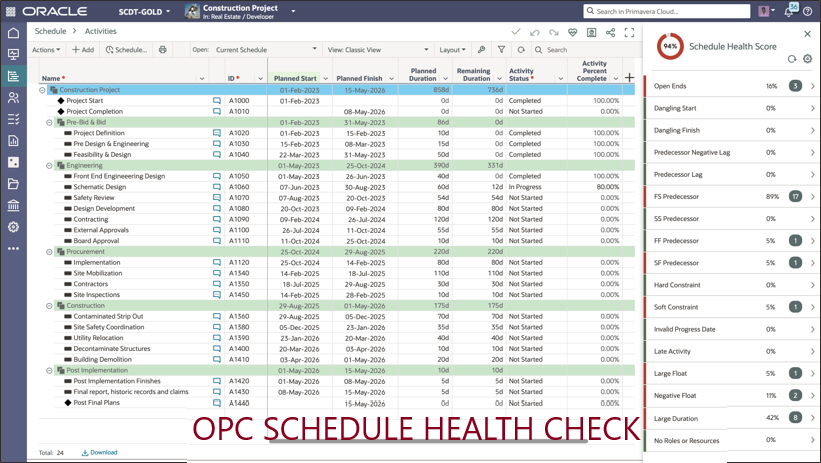
Below are some images illustrating the features offered by OPC:

Considerations when choosing between OPC and P6 EPPM
In the past five years, Oracle Primavera Cloud (OPC) has officially been in operation. However, only recently has the platform been significantly enhanced (based on real-world implementation experience) to truly become a superior alternative to P6 EPPM for most organizations.
We recommend OPC for businesses seeking a comprehensive project scheduling and management solution in a modern environment.
Differences in system architecture
Due to architectural differences, OPC may not be the optimal choice for extremely large-scale or mega-projects.
P6 EPPM is built on a relational database architecture, typically using Oracle Database. This management system is optimized to handle very large volumes of data—including millions of activities, logical relationships, and multiple levels of Work Breakdown Structure (WBS).
In contrast, OPC is a purely cloud-native SaaS (Software as a Service) application designed for flexibility and a modern interface. However, at present, OPC is not yet fully optimized for extremely large-scale and highly complex CPM schemes.
To put it simply:
- The P6 is like a weightlifter: extremely powerful, capable of handling enormous loads.
- OPC is like a gymnast: flexible, agile, and efficient, but designed for different kinds of "problems."
Both tools are powerful — but serve different types of projects.
How will the cloud model impact your organization?
One of OPC's key advantages is its suitability for a "cloud-only" strategy, as the platform is offered entirely on a subscription model.
This eliminates the need for complex IT infrastructure or cumbersome software installations. Users benefit from seamless integration and automatic updates—with new versions released monthly.
Based on observations, Oracle is investing significantly in the development of OPC. Many of the new features added clearly show that they are based on user feedback, indicating that the platform is continuously evolving to meet market demands.
An integrated and accessible training system.
OPC is equipped with a rich set of integrated training resources to help users maximize the value of the platform.
By simply accessing the "Help" section, users can immediately access tutorial videos and detailed user manuals. This shortens the time needed to familiarize themselves with the system, enhances the overall experience, and facilitates the team's rapid and efficient deployment and operation of OPC.
A direct comparison between the two platforms.
If you're still weighing the options between P6 EPPM and Oracle Primavera Cloud (OPC) to determine the right solution for your organization and user base, here are some criteria for comparing the core features of the two products to aid in your evaluation and decision-making process:
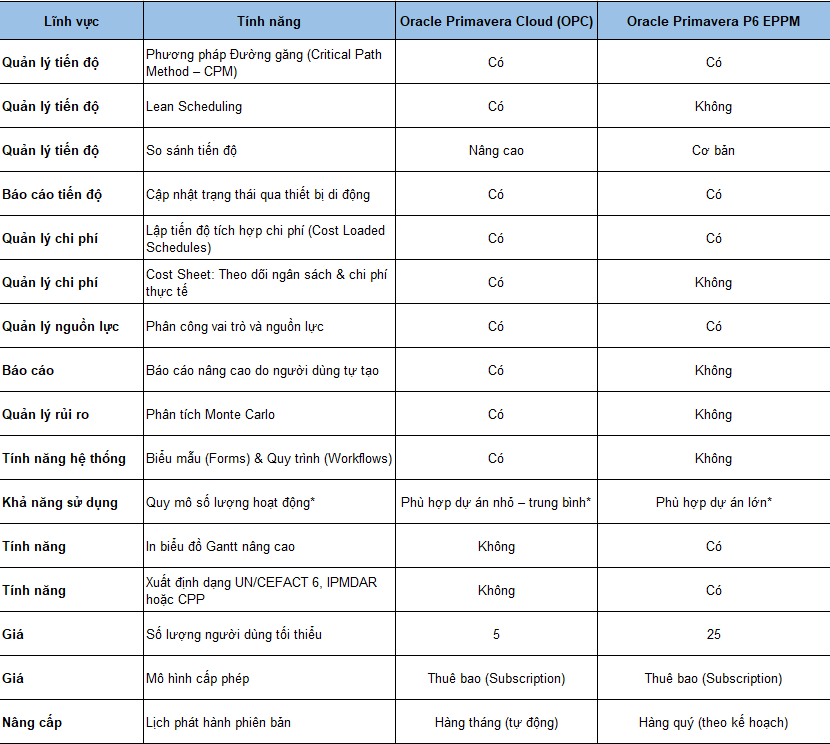
*Note: Project size classification is relative, depending on the data structure, number of activities, logical relationships, and complexity of the WBS.


